Christmas trees, but make them botanical.
Christmas decorating doesn’t always have to be about more ornaments, more sparkle and perfectly structured bows.
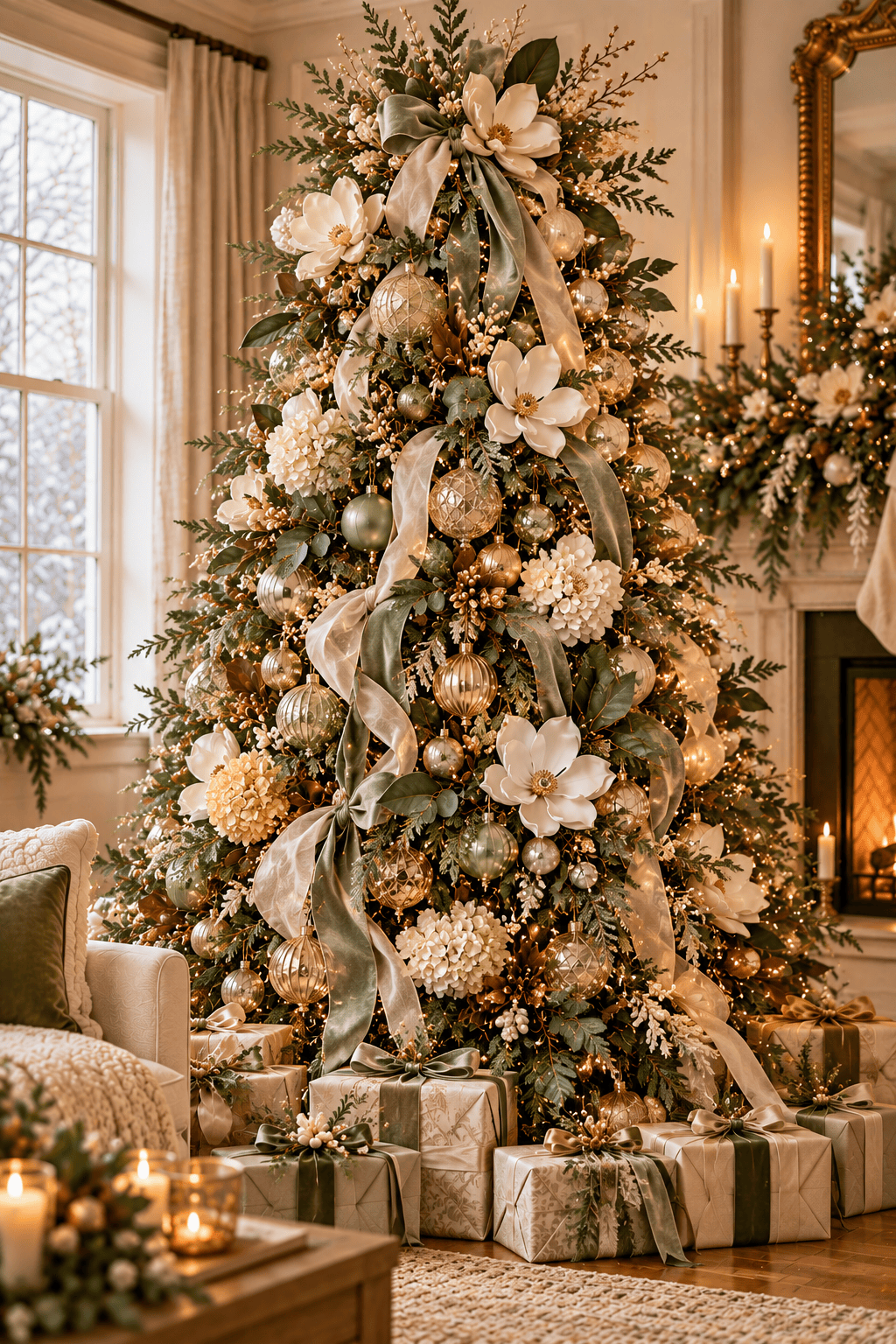
This year, I’m especially drawn to a softer kind of Christmas tree—one built around lush greenery, magnolia leaves, ivory flowers, natural textures and flowing ribbon.
Think European country house meets romantic Christmas editorial: abundant, slightly imperfect and layered enough to feel special without looking overly coordinated.
And the beautiful thing about this style? The greenery becomes part of the decoration.
Want to shop the look?
Discover all our curated finds for creating a beautiful organic Christmas tree.
Explore the Benable Shopping List →
Start With the Greenery
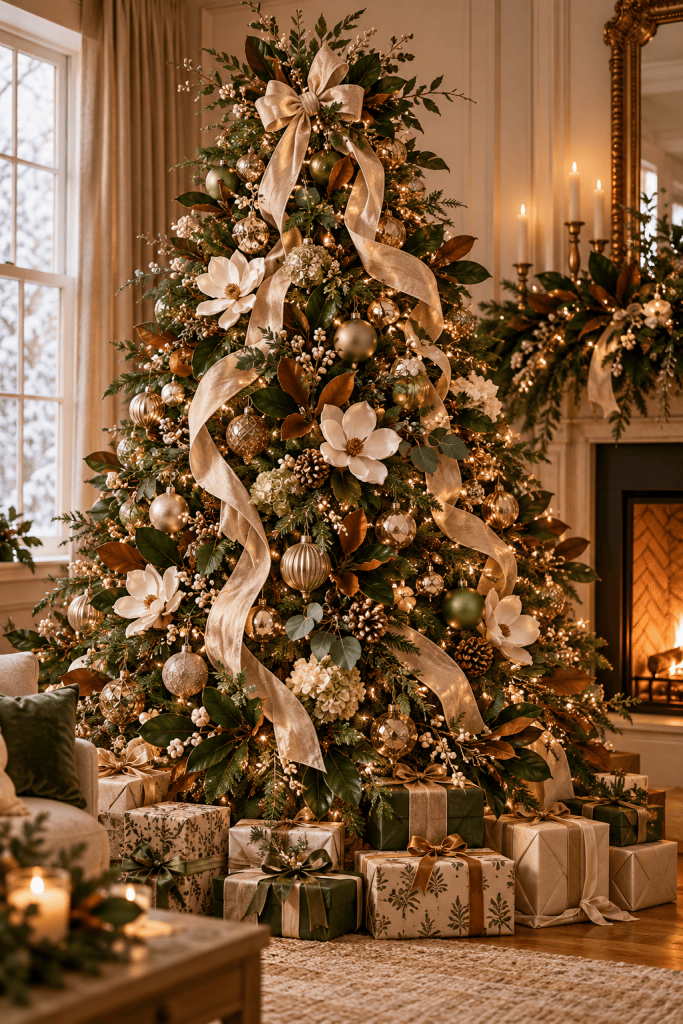
The secret to an organic-looking Christmas tree is to make the tree feel fuller and more dimensional before you even start adding ornaments.
Instead of relying only on the branches of the tree itself, layer in different types of greenery.
Think:
- Real-touch cedar
- Pine and fir branches
- Eucalyptus
- Magnolia leaves
- Olive-style foliage
- Small berry branches
- Natural-looking botanical sprays
Current 2026 holiday design coverage is leaning heavily into botanicals beyond traditional evergreen, including magnolia, eucalyptus, berries and branches, with realistic “real-touch” foliage being used to create a fuller, more convincing look.
The key is variation.
Different leaf shapes, tones and textures make the tree feel more natural than using dozens of identical picks.
Let Magnolia Take Center Stage
Magnolia is one of my favorite ways to make a Christmas tree feel instantly more romantic.
The glossy leaves bring depth against evergreen branches, while creamy magnolia blooms soften the overall look.
For a classic version, keep the palette simple:
deep green + magnolia white + ivory + champagne + warm gold
You don’t need flowers on every branch.
Instead, place larger blooms where you want the eye to travel—near the top, through the middle and toward the lower third of the tree.
Then fill the spaces around them with smaller botanical details.
This creates those little moments where you notice something different every time you look at the tree.
The Ribbon Should Feel Soft, Not Stiff
This is probably my favorite part of the look.
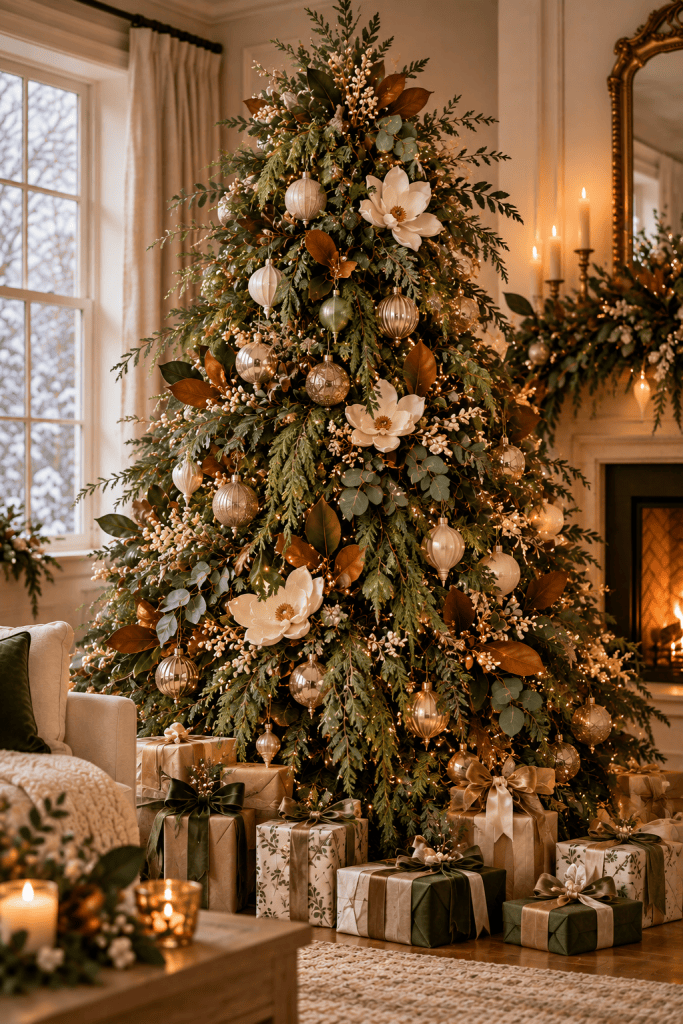
Rather than creating perfectly symmetrical bows or wrapping one ribbon tightly around the entire tree, let the ribbon fall through the branches.
Long tails, loose loops and gentle curves give the tree movement.
For this style, I love:
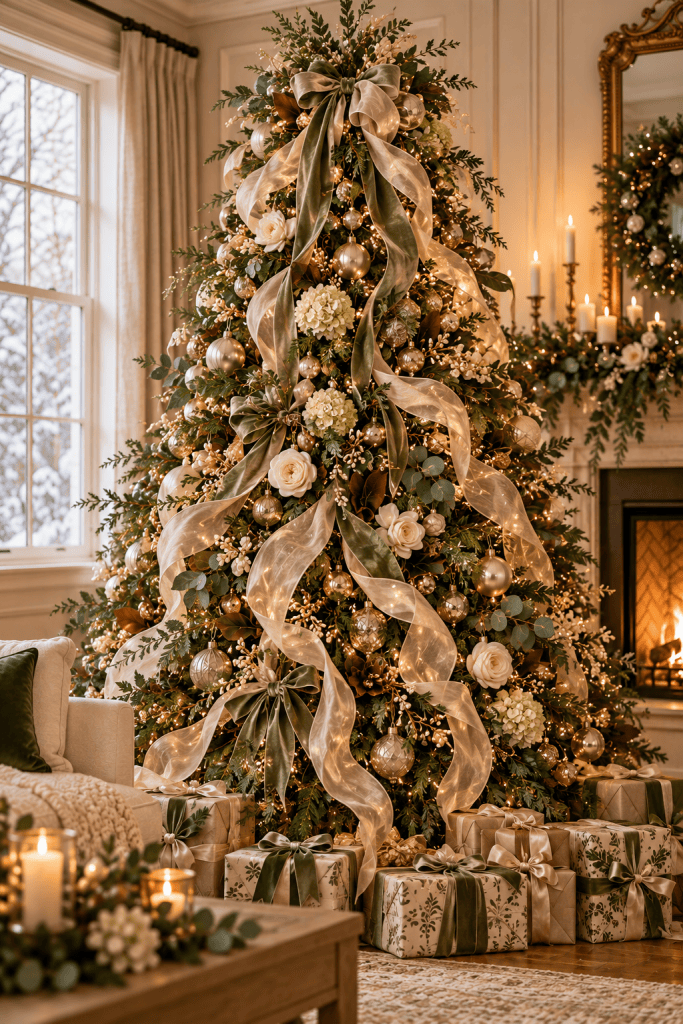
- Ivory silk or sheer ribbon
- Champagne ribbon
- Soft sage velvet
- Cream velvet
- Muted gold
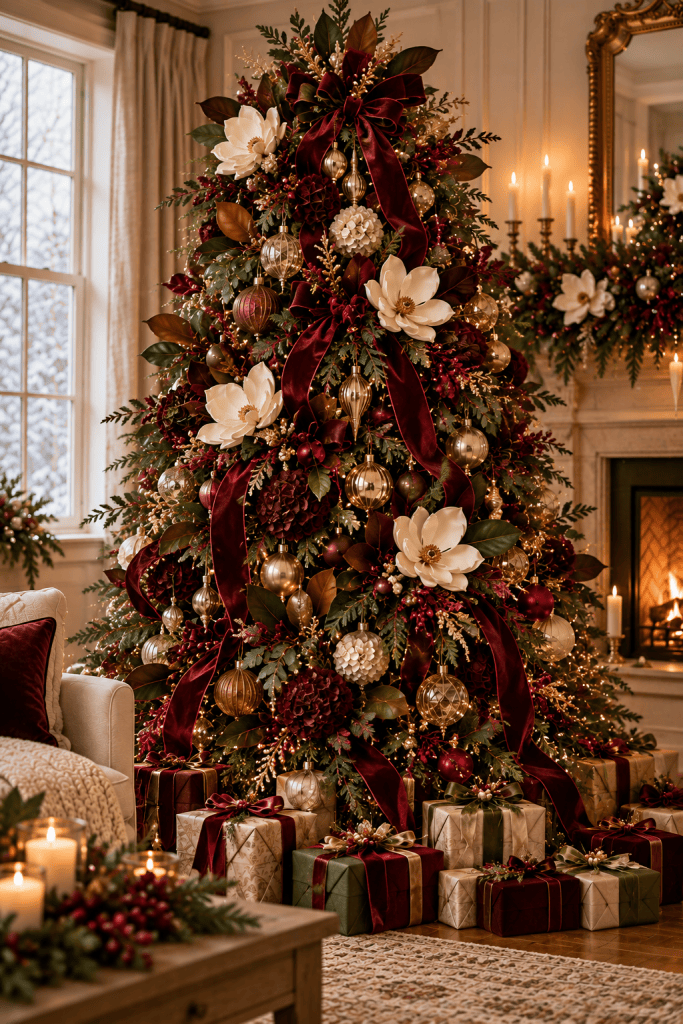
- Burgundy velvet for a deeper version
Current Christmas design coverage also emphasizes layered ribbon, different textures and generous ribbon treatments as a way to give trees a more collected, designed appearance.
And you don’t have to make every ribbon treatment identical.
A slightly different drape here and there can actually make the finished tree feel more relaxed and organic.
Keep the Ornaments Supporting the Botanicals
Once you’ve added greenery, flowers and ribbon, the ornaments don’t need to do all the work.
That’s what makes this style different from a traditional ornament-heavy tree.
Choose ornaments that support the palette rather than compete with it.
For a romantic cream and sage tree, try:
- Matte ivory baubles
- Champagne glass ornaments
- Antique gold
- Soft sage
- Pearl details
- Clear or lightly textured glass
- A few natural wood or botanical ornaments
For a richer version, swap the sage for deep burgundy and introduce darker berries, velvet and bronze.
That creates a completely different mood without changing the basic decorating formula.
Three Botanical Christmas Palettes to Try
01 — Romantic Cream & Sage
Ivory · cream · sage · eucalyptus · champagne · antique gold
Soft, feminine and quietly luxurious.
This is the palette I’d choose if you want the Christmas tree to feel elegant without looking overly traditional.
02 — Burgundy & Magnolia
Deep burgundy · magnolia white · evergreen · bronze · gold
A little moodier and much more dramatic.
Burgundy velvet ribbon, dark berries and cream flowers make this version feel especially beautiful in a traditional room.
03 — Natural Organic Luxury
Forest green · magnolia · eucalyptus · warm brown · champagne · cream
This is the most understated version.
Let the foliage do most of the decorating and use ornaments sparingly. Natural-looking greenery, botanical stems and warm metallic details create enough texture without needing a huge amount of sparkle.
Don’t Forget the Rest of the Room
A beautiful botanical Christmas tree can look even more intentional when the same language appears elsewhere in the room.
You don’t need to duplicate the entire tree.
Instead, repeat one or two elements.
For example:
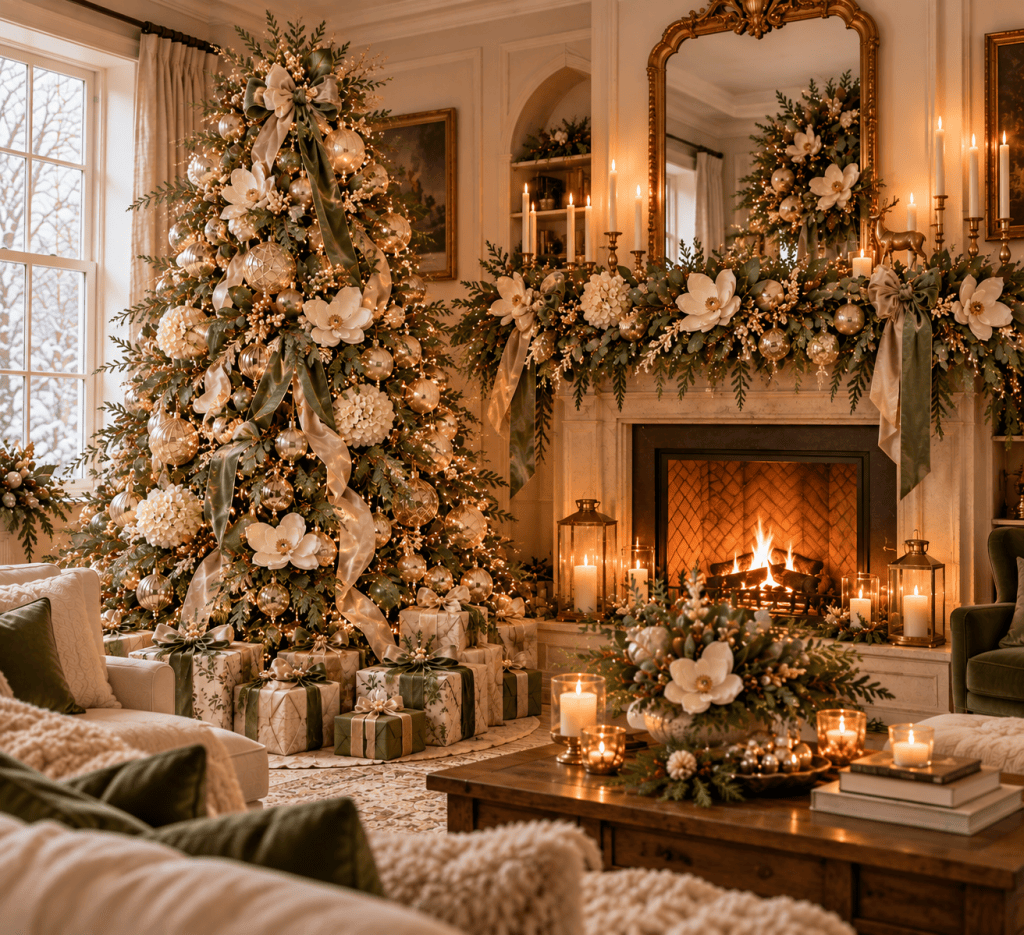
Tree: magnolia + eucalyptus + ivory ribbon
Mantel: eucalyptus + magnolia + candles
Coffee table: greenery + ivory flowers
Gift wrapping: cream paper + sage ribbon
This creates continuity without making everything look like a matching Christmas set.
The same approach works particularly well with garlands. Current holiday design guidance is also emphasizing layered greenery and natural botanical installations beyond the tree.
The Beauty of a Less Perfect Tree
I think this is what makes the whole look feel special.
Don’t worry about making every branch symmetrical.
Let one piece of greenery stick out slightly farther.
Let a ribbon tail fall lower on one side.
Mix glossy magnolia leaves with softer eucalyptus.
Combine fresh-looking foliage with realistic faux stems.
The goal isn’t to make the tree look untouched by human hands.
It’s to make it feel collected, layered and alive.
A little movement is what keeps an elaborate tree from feeling too stiff.
Make It Feel Like Christmas, Not a Wedding
There is one easy trap with floral Christmas trees: going too far and accidentally creating a wedding installation.
The easiest way to avoid that is to keep unmistakable Christmas elements in the mix.
Think:
warm lights + evergreen + ornaments + ribbon + florals
rather than:
flowers + ribbon + flowers + ribbon
Pinecones, berries, antique gold ornaments, glass baubles and warm candlelight help ground the floral elements in Christmas.
The result should feel like Christmas first, flowers second.
A Softer Kind of Christmas
Maybe that’s why I love this style so much.
It doesn’t rely on one statement ornament or one perfect bow.
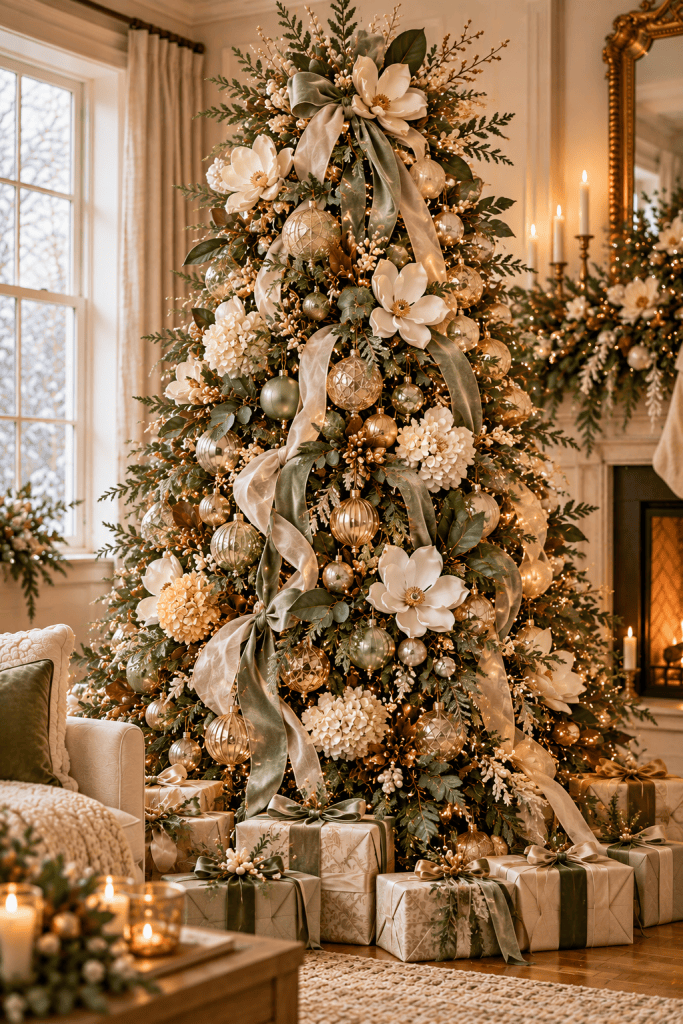
It comes together through layers—greenery against greenery, ivory flowers against dark branches, soft ribbon against glass ornaments and warm lights shining through everything.
It feels traditional without being predictable.
Romantic without being overly sweet.
And luxurious without needing every decoration to look expensive.
Sometimes the prettiest Christmas trees are the ones that look like they grew that way. 🤎
PrettyThingsClub Christmas Edit
Ready to shop the look?
Explore our curated Benable shopping list featuring realistic greenery, magnolia florals, soft ribbon, elegant ornaments and more to help you recreate this botanical Christmas aesthetic.
Explore the Organic Christmas Tree Shopping List →
This post may contain affiliate links. If you purchase through a link, I may earn a commission at no extra cost to you.


